Foundations
How the thing works, and why it was built that way.
The Reader Inc. magazine
51 long-form pieces on reading apps and reading machines — how ours works, how the rest of the field compares when judged by the same rules, where all of it is going, and what a reading tool is allowed to claim when the reader has a reading difference.
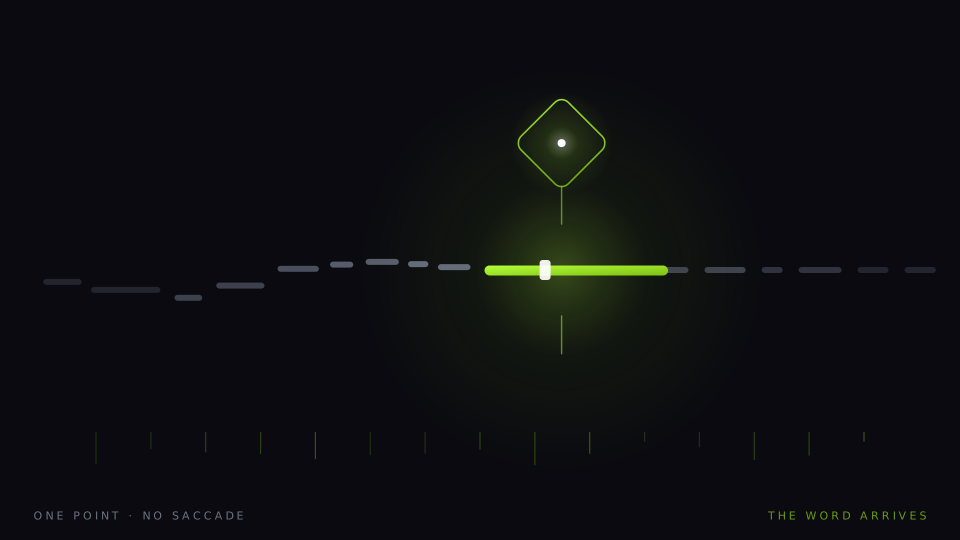
Word-by-word presentation removes eye movement completely, and eye movement is a real cost. It is also a much smaller cost than the speed-reading industry needs it to be. Here is the arithmetic, with nothing rounded up.
Read the piece
Dyslexia is a difficulty with word recognition, decoding and spelling. It is not a difficulty with thinking. That distinction decides which tools are honest, which are useless, and what a presentation setting is entitled to claim.
Six different machines share one shelf in the app store, and they do not do the same job. What each family removes, what it puts back, and where the evidence runs out — including for ours.
Forecasts about reading technology usually describe the screen and forget the reader. Here is an attempt at the opposite — one constraint that will not move, five that will, and the only frontier we think is worth competing on.
Four desks. Foundations explains the machine. The field judges everyone else by the standard we ask to be judged by. Futures is where we speculate and say so. Access is the one we were most careful with.
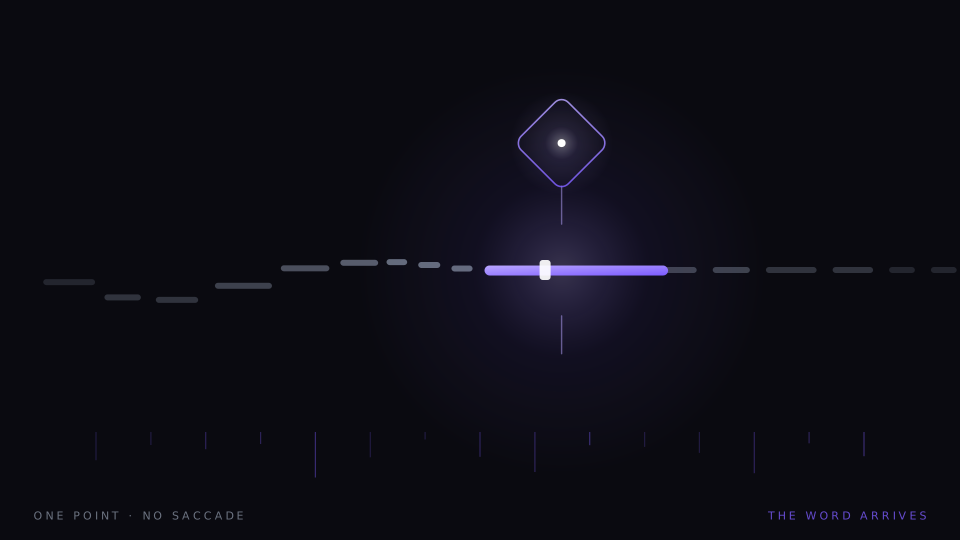
Word-by-word presentation removes eye movement completely, and eye movement is a real cost. It is also a much smaller cost than the speed-reading industry needs it to be. Here is the arithmetic, with nothing rounded up.
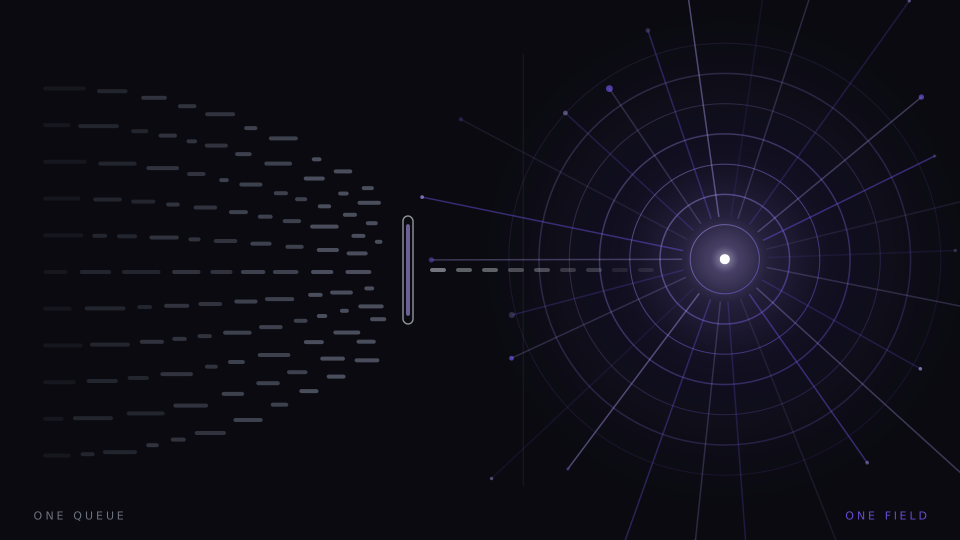
Most reading tools treat pictures as ornament. In this one the picture is structural — it is there to carry the load that the inner voice drops when the words start moving too fast to pronounce.
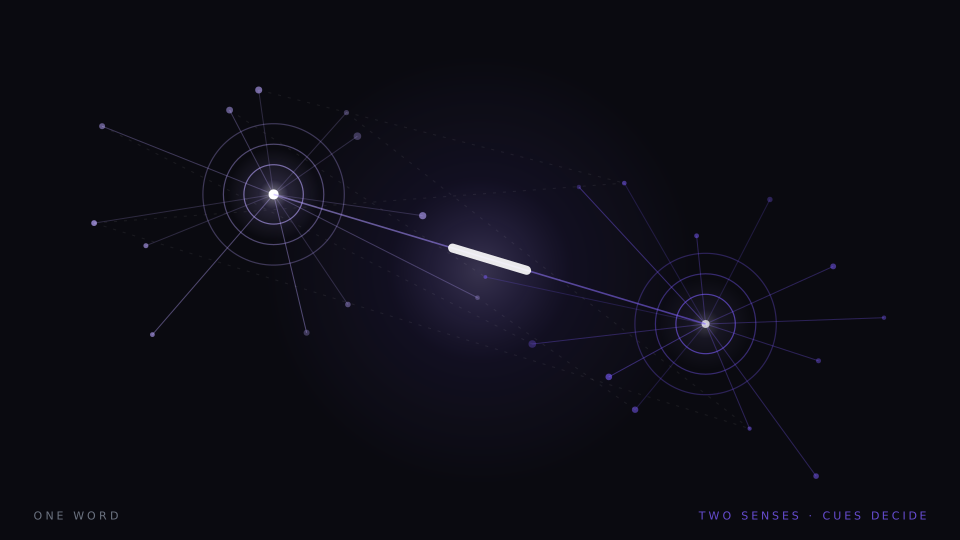
Every image in the stream depends on a decision made in a quarter of a second: which sense of this word did the sentence mean. Get it right and nobody notices. Get it wrong and you have injected a meaning that was never there.
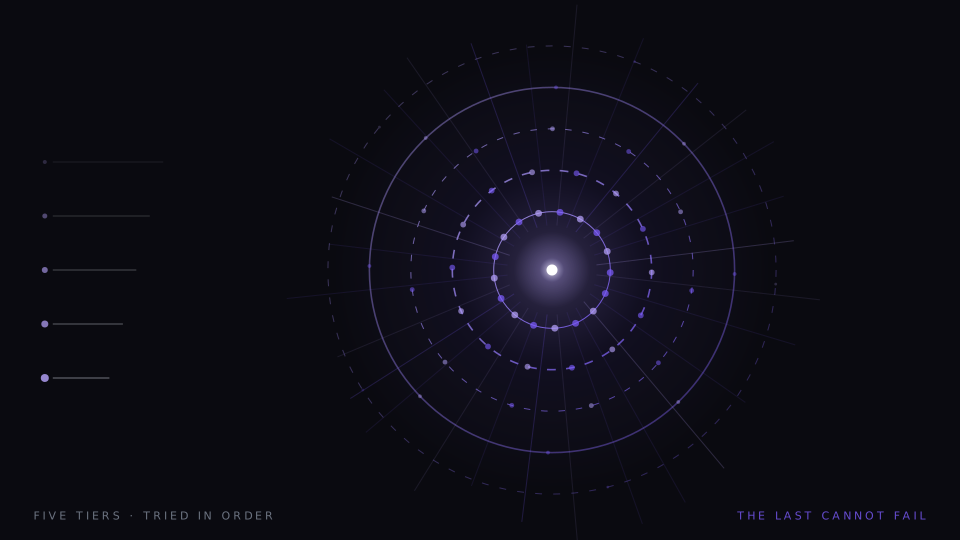
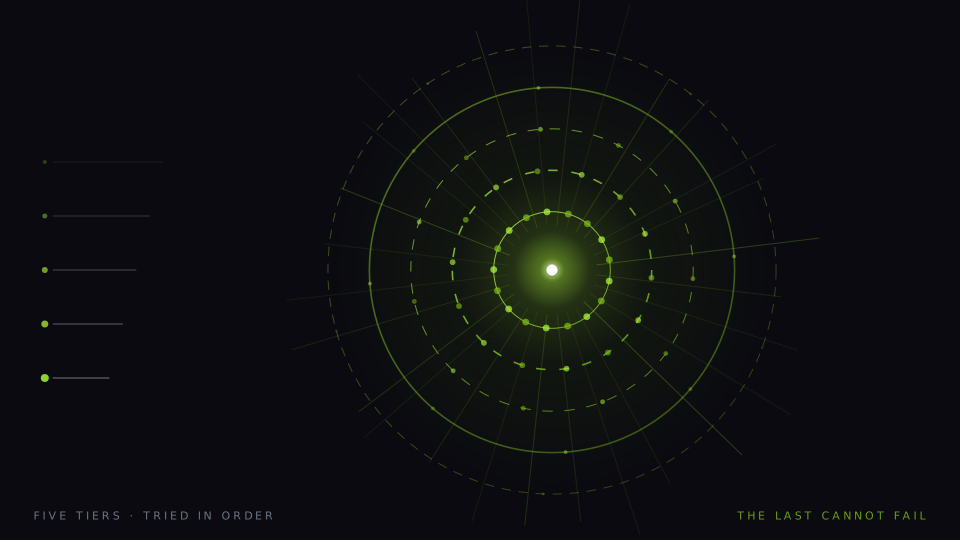
A picture dictionary that covers ninety-four per cent of English fails on the words that were carrying the meaning. Five resolvers, tried in order, with a last one that cannot fail — and an honest account of what the last one is worth.
The average reading speed for adults has sat at 200–300 words per minute across a century of measurement. That number is a rate, not a score — and the one on our own slider is not quite the one in your head.

A reading comprehension test does two jobs at once: it tells you what stuck, and the act of being tested makes more of it stick. How our recall check works, and how to run an honest experiment on yourself.
Most speed reading practice fails the same way: too long, too fast, and stopped only when it stops working. What a session with a reading machine should look like — and the transfer question nobody has answered, including us.
A private reading app is easy to promise and hard to prove. Ours is one HTML file with no account, no backend and no telemetry — an architecture where the promise is checkable, and the costs are ours to carry.
A visual reading aid has one core decision to make: where the picture sits relative to the word. We ship eight answers because we do not know which one is right — and this is a map of the design space, limits included.
Six different machines share one shelf in the app store, and they do not do the same job. What each family removes, what it puts back, and where the evidence runs out — including for ours.
A schoolteacher's method became a cultural institution, reached the White House, and then met the laboratory. What survived the measurement is smaller than the legend and more useful than the debunking suggests.
Bolding the first few letters of every word became one of the most popular reading interventions ever released, and one of the least supported. That gap is worth taking seriously rather than scoring points off.
Text-to-speech is the fastest-growing branch of the speed-reading family, and the fair thing to say about it is that it wins some arguments outright and loses others badly. Here is which — and what happens when you lock the two together.
The machine summariser is the newest member of the speed-reading family and the most seductive, because for triage it is often the correct tool. It is also somebody else’s compression, and compression is a series of judgements you never get to see.
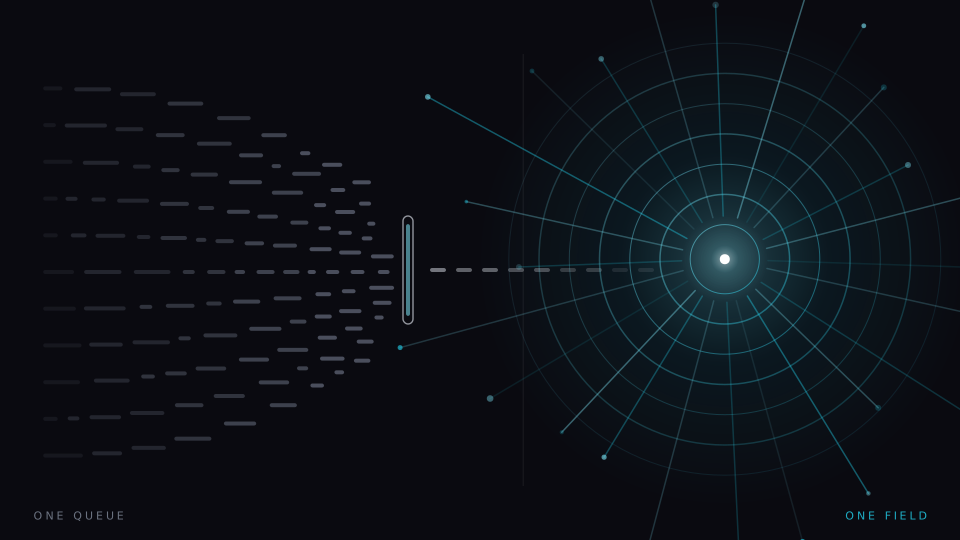
Every reading product quotes words per minute, a figure that is trivially easy to inflate and means nothing on its own. Here is how to benchmark a speed reader honestly, including this one, and what you will probably find.
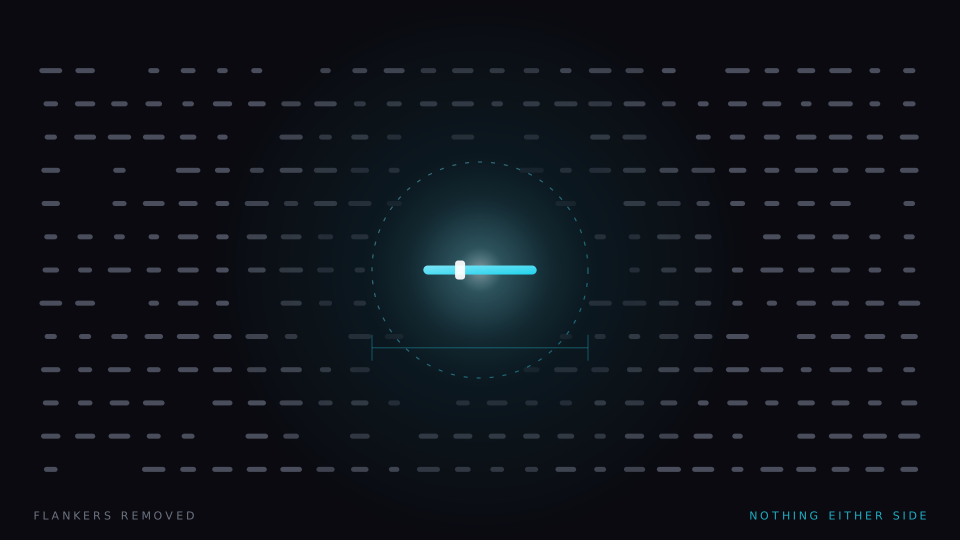
Every January the listicles crown a new best reading app, ranked on screenshots and feature counts. Here are five questions that would produce an honest ranking — and what happens when you ask them of every category, including ours.
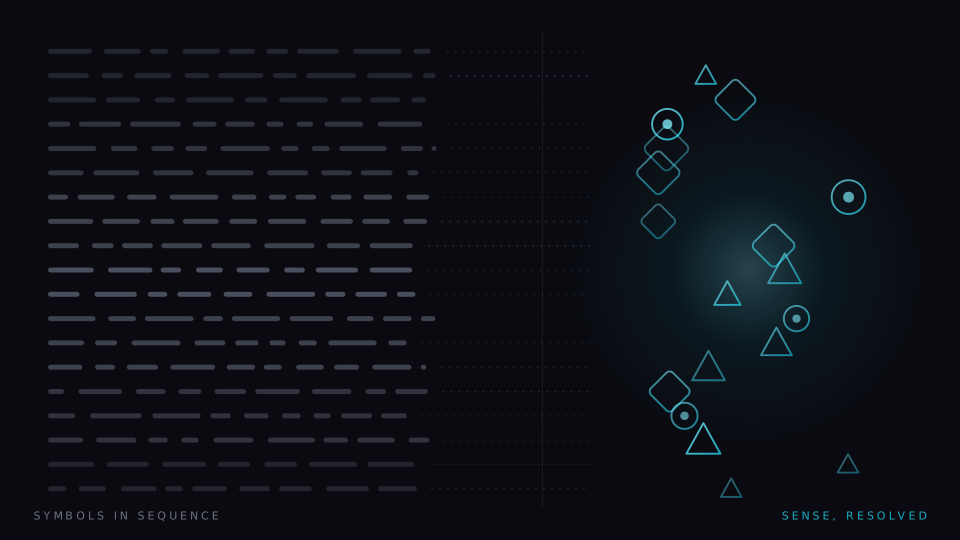
Speed reading apps promise the same number and deliver it by different machinery. A fair comparison sorts them by what each mechanism genuinely buys — and applies the one test every one of them, ours included, has to pass.
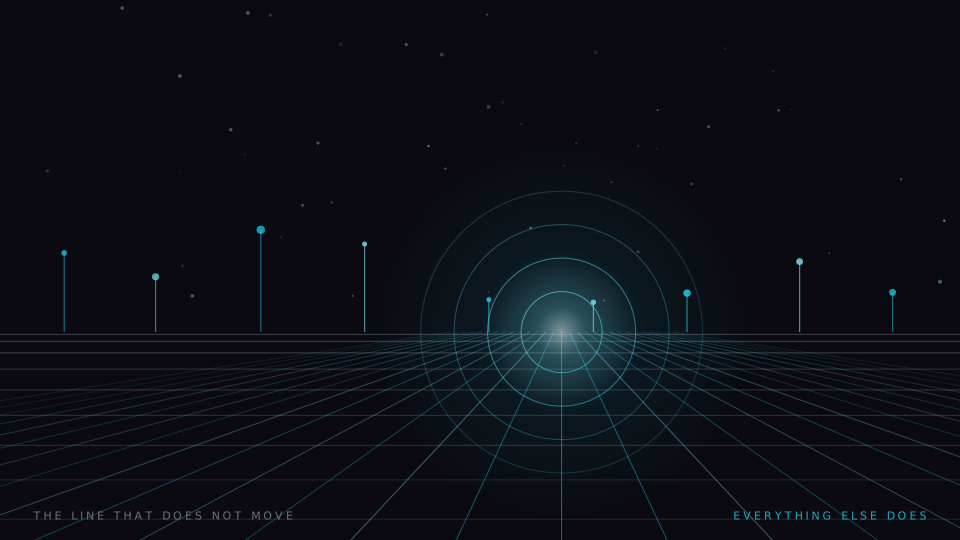
Rapid serial visual presentation spent decades as a laboratory instrument before anyone tried to sell it. The story of RSVP reading is the story of a method that worked, a promise that did not, and what was left after the headlines.
Read later apps solved capture so well that reading became the neglected half of the promise. On Pocket, Instapaper and their heirs, treated fairly — and on what actually shrinks an unread pile, which is not a better parser.
The big ebook reading apps all set type on your behalf. Judged against the spacing and crowding evidence, some hand you the controls that matter and some quietly keep them. A field guide to e-reader typography — and to the trade we make instead.
Goodreads shelves, StoryGraph statistics, streak counters, the yearly challenge. Measurement genuinely changes behaviour — and it quietly redefines the thing being measured. What a reading tracker app can honestly claim, including ours.
Reader modes, bolding overlays, read-aloud voices, dictionary popovers — every reading browser extension that can restyle a page can also read it. What that permission means, how to judge it, and our own extension held to the same light.
PDF is a print format that ate the world’s documents. Reading PDFs on anything but paper means fighting fixed layout, guessed reading order and scanned pages with no text in them at all — and every tool in the field, ours included, fights partially blind.
Free reading apps arrive as trials in disguise, feature-gated demos, ad-funded readers and the occasional genuinely complete thing. An argument about what free should be required to mean — applied to our own free tier as sceptically as anyone’s.
A watch face is forty millimetres of glass and the worst reading surface ever mass-produced — unless you only ever show one word. Here is the concept, and the four things that would have to be true before we built it.
Forecasts about reading technology usually describe the screen and forget the reader. Here is an attempt at the opposite — one constraint that will not move, five that will, and the only frontier we think is worth competing on.
A neural voice with 82 million parameters already runs inside this browser tab. The question is whether a model that understands word sense can join it — offline, inside a 150-millisecond frame, without a download nobody would accept.
Adaptive reading is coming, and most of it will optimise for the wrong thing. A survey of the signals — behaviour, eyes, wearables, brainwaves — and the design argument that matters more than any of the sensors.
The cost of producing plausible prose has fallen close to zero. The volume arriving at every desk rises, the value per page falls, and the scarce thing stops being writing. It becomes attention that has actually been paid.
Most tools sold as an AI reading assistant are really delegation tools: the model reads so you don’t have to. That is sometimes exactly what you want — and it is a different product from helping you read.
The market in reading apps for schools is crowded, persuasive and thinly evidenced. Here is the standard we think a school is entitled to hold any reading software to — starting with control, custody of data, and a plain statement of what it is not.
Every reading interface since the codex has traded away something the page did quietly well. Before anyone declares the future of reading, somebody should write down what the page actually does — because we sell the thing that deletes it entirely.
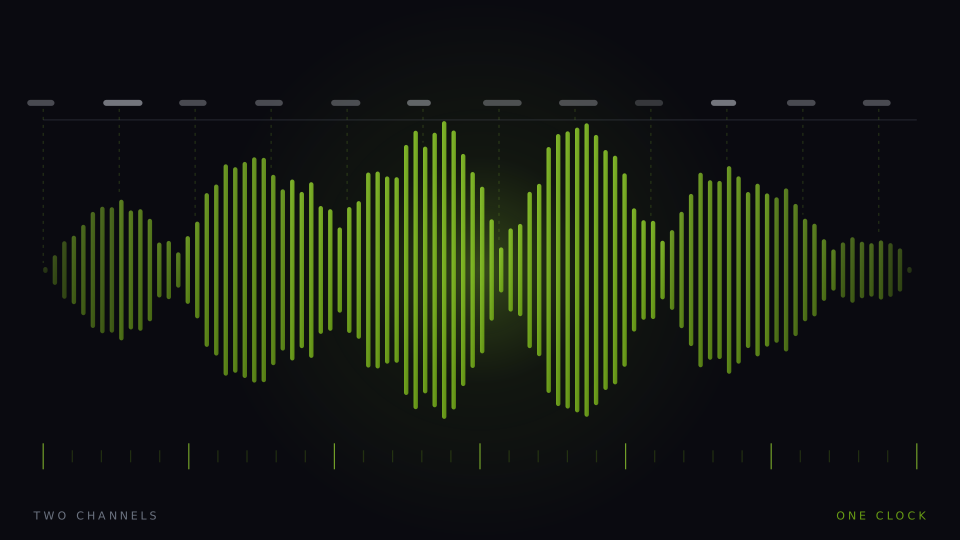
The best synthetic voices live in a data centre and hear everything you read with them. Ours is a fifteen-million-parameter model running in the browser tab. On-device text to speech is a turning point — and a trade worth describing honestly.
Every attempt to put continuous prose in a headset has been miserable, for reasons that live in the optics and the retina rather than the software. Reading in AR may need a page-less format — though nobody, including us, has tested one at scale.
Dyslexia is a difficulty with word recognition, decoding and spelling. It is not a difficulty with thinking. That distinction decides which tools are honest, which are useless, and what a presentation setting is entitled to claim.
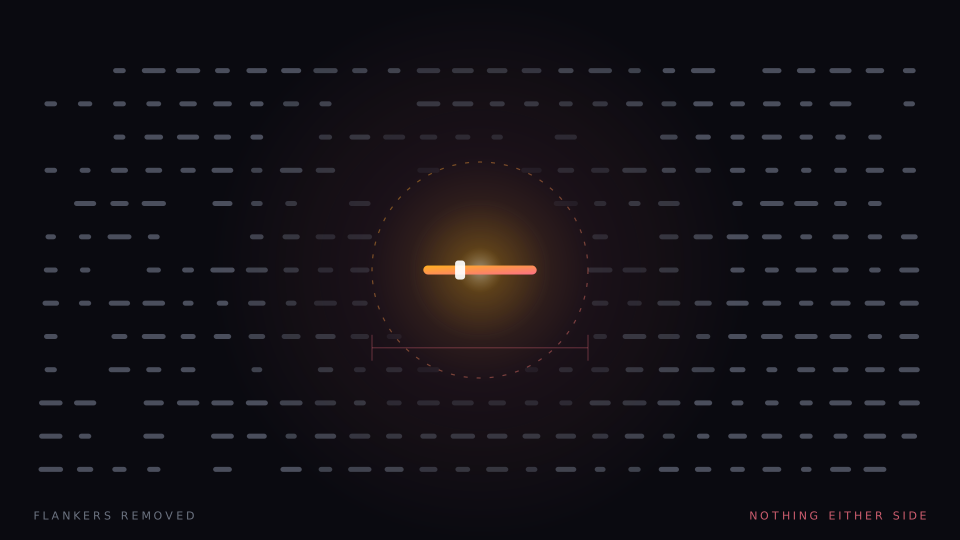
A letter you can read easily on its own becomes hard when other letters sit beside it. Crowding is normal, it is measurable, and it is the one thing single-word presentation does not merely reduce but abolishes.
The failure most readers describe is not an inability to concentrate. It is arriving at the bottom of a page having taken in none of it, going back, and losing the thread again — a loop that costs time and then costs confidence.
Stroke, brain injury, MS, the fog reported after some cancer treatments, long COVID, ordinary ageing. Different mechanisms entirely, with one thing in common: someone who read comfortably now finds it work.
For a great many readers the picture is not a decoration on the text. It is the primary channel. There is a serious, decades-old tradition of building for those readers, and we are standing downstream of it.
The accessibility market has a long habit of shipping confidence ahead of evidence. We sell a reading app, so the habit is available to us too. This is the list of sentences we have decided not to write.
Most dyslexia software is designed for children in classrooms. Adults with reports to finish and degrees to earn need something else. A survey of reading tools for dyslexic adults — what each one buys, and where the evidence stops.
Any reading app for dyslexia is making claims the moment it names its audience. Five questions separate the honest tools from the wishful ones — and because fairness demands it, our own app answers them last.
Dyslexie and OpenDyslexic are sincerely made and widely loved. Controlled comparisons keep finding that a well-spaced ordinary sans-serif does just as well. What dyslexia-friendly fonts actually deliver — and why comfort still counts.
Dyslexia is a difficulty with decoding, not with thinking — which is why a synthetic voice can hand a reader their own comprehension back. What text to speech reading does well, what it cannot practise, and why where the voice runs matters.
The page is finished and nothing arrived, so you go back to the top. On reading with ADHD: the re-reading loop, why an externally set pace can be a metronome or a cage, and how to find out which it is for you.
A field guide to assistive reading technology — screen readers, text-to-speech, overlays, rulers, scanning pens, audiobooks and single-word streams. What each tool is for, what the evidence supports, and where the claims outrun it.
Office work is a reading job wearing other job titles. What workplace reading accommodations actually look like, what an employee can adopt without telling anyone, and why what you read at work is nobody else’s business.
If you want to help a child struggling with reading, it matters enormously which job you are doing tonight: getting through the chapter, or changing what reading costs them. Tools can do one of these. Only teaching does the other.
Bigger letters seem like the obvious answer, and sometimes they are. But magnification has a paradox at its centre, and the honest survey of low vision reading tools has to start there — with what enlargement quietly takes away.
The return sweep is the longest, blindest jump the reading eye makes, and it is where places get lost. On losing your place when reading — and every tool, from finger to typoscope to software, that promises to hold it.
Eyes change, pace changes, and the stack of unread books does not shrink to match. An honest survey of reading tools for older adults — what actually helps, what merely sells, and the one cost of our own approach that bites hardest here.
Separating them is a discipline, not a taxonomy. It keeps the speculation out of the mechanism, and it keeps the marketing out of the accessibility writing.
How the thing works, and why it was built that way.
Where every other speed reader stands, judged by the same rules we ask to be judged by.
What reading machines become once the model runs on the device in your hand.
Dyslexia, attention, injury, ageing — reading differences, and what we are and are not allowed to claim.
The app ships a comprehension test and turns it on. Run a passage you already know, answer the questions honestly, and see whether any of this survives contact with you.